Posts

Showing posts with the label Famagu'on

Tåke' Biha: The Flower that Makes You Smile

Image
It is a joyous point in every Chamoru child’s life when you discover this yellow flower, which has a name that will make you giggle endlessly, tåke’ biha, which translates to old woman’s poop.    I remember seeing them growing near my grandparents house in Mangilao when I was young, but not knowing what they were called.    Lao fihu taiguini gi dumångkolo'-hu, ti meggai tininingo'-hu put trongko yan tinanom siha, pi'ot tiningo' put siha gi Fino' Chamoru.     It wasn’t til I was 20 years old and actively learning Chamoru that my grandmother told me what they were called. I broke out laughing and so did she.    I am reminded of this recently for a few reasons. Firstly, the first year I started teaching my Zoom Chamoru classes, I had transitioned from offering them in coffee shops on Guam to largely students who had grown up in Guam who were attending in person, to now hundreds of students attending, most of whom had never really lived in Guam o...

Biba Eskuelan Hurao!

Image
This month, Lulai, my third oldest started her first year attending the Maga'låhen Hurao Charter School.  She had begun attending the Hurao Tiempon Somnak over the summer, but now this month has begun attending the Hurao school in earnest and Desiree and I are excited to say the least.  It has just been a few weeks, and so far guaha na biahi ya-ña, guaha na biahi ti ya-ña.  Every day she both enjoys attending school but is also struggling with separation anxiety saying "Ma'å'ñao yu' yan mahålang yu' para si nanå-hu yan si La'yak" (I'm afraid and I miss my mom and La'yak). Lulai's older siblings, Sumåhi and Akli'e' attended Hurao on and off in different forms over the years, sometimes the summer programs, sometimes the after school programs, and later even helping as aides.        All of this was across more then 10 years, yet Hurao wasn't to the point yet where it was an immersion or charter school in earnest.    After taking pi...

Tu'los Mo'na Lahi-hu

Image
My 19 month old Makåhna, admiring the såkman model that is part of the Hinanao-ta Exhibit at the Guam Museum. I love bringing people into this part of the exhibit, where we can see the features of Chamoru life at the time of contact with Europeans. Their religion and culture. Their weapons and style of warfare. Their diet and architecture of their homes. And of course their navigation and seafaring abilities.    This section is always tinged with some sadness though because of what awaits in the next gallery of the exhibit, the consequences of colonization, one of them being Chamorus losing this connection to the sea and the depth of knowledge to navigate the open ocean as their ancestors before them had done for millennia.    But just as when I see my children playing near this model, hope is also on the horizon as well, if you look a little further. Chamorus have been learning from others in Micronesia for decades now about how to carve and how to navigate and the ...

Dalai Nene

Image
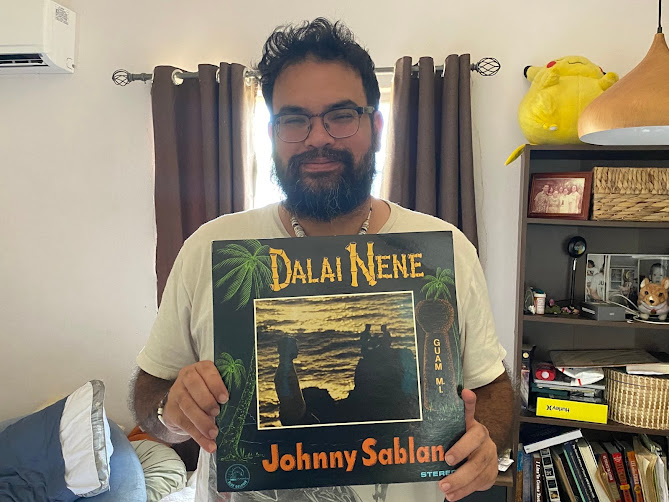
I have for several years now been collecting plåkan Chamoru or Chamoru vinyl albums.  Each week I scour the internet searching for records I haven't seen or heard yet.  Every few months I'm able to find a new one to fill in the gaps in my collection.  I have over the past few years been able to find four copies of this album "Dalai Nene" released by Johnny Sablan in 1968. This was the first ever Chamoru language music album and was released when Johnny Sablan was just 20 years old.  I have collected four in all, one for each of my kids (three are already here, one more is a few months out from when I am typing this).  Each will inherit one of them when I pass away.  This album is historic in so many ways, but one thing for me makes it even more unique and special, namely its use of Chamoru for its text.  There are hundreds of Chamoru albums that have been released on vinyl, cassette and CDs. And while all used Chamoru as the primary language for their ...

Pakaka Neni Famatkilu

Image
My time with Lulai Lumuhu is filled with dancing and singing. Desiree always said that she would pay attention to my voice while she was in the womb. When she heard others, like Sumåhi and Akli'e' she would kick and move. But when I was speaking to her she would stop and listen. Ti siguguro yu' esta på'go, kao este kumekeilekña na ya-ña i bos-hu pat ti ya-ña i bos-hu. Kao ha respepeta yu', pat kao inespåpanta? I try as much as possible to sing Chamoru songs to her, knowing that she'll hear English and other songs from just about everywhere else, she'll be hearing Chamoru from me. The song that soothes her the most is "I Puti'on." Akli'e' and I do a nice duet of the song for her to help calm her when she is cranky. Over the years I've collected several dozen Chamoru children's songs from before World War II, many of which are fragments. Songs then were different then the way we think about them now. People took tunes they liked a...

The Parting Glass

Image
When my son Akli'e' and I played Assassin's Creed Black Flag (Åttelong na Bandera) together, we were both touched by the game's ending ballad, "Parting Glass," a famous Scottish farewell song. Even  after  I stopped playing it years ago, we still find ourselves singing to it in the car and referencing his favorite line from the song "for want of wit." Este uno gof ya-hu na huegon bideo. Ya hu hasso gi finakpo' annai makånta este na kånta, kulang tumåtanges yu'.  Over the years when we sing this song, my kids and I eventually added in our own Chamoru lyrics for it. I've pasted them below.  As I reflect back on the year that was 2019; the love, the pain and everything in between, this song was a beautiful way to bid it adios. ************************* The Parting Glass Of all the money there ere I had I spent it in good company Put todu i salape’ ni’ hu chule’ I manabok-hu hu gaståyi And all the harm that ere I ...

Truth-Telling in Children's Stories

Image
The first book that I bought for my daughter, prior to her even being born was a children's book that focused on the tale of the slaves who killed their captors aboard the ship The Amistad and after a long legal struggle were allowed to return to Africa. I only read it to her a few times over the years because the subject matter was difficult and the historical and racial politics difficult to unpack. Over the years I've tried to do the same with other books, especially liking to read to the kids books that focus on the experiences of Native Americans and African Americans. Parenting is a convoluted endeavor no matter what ethical commitments you do or do not feel. There are always problems, limitations, blindspots and ways in which your best intentions or goals backfire. But pushing your children to accept difficult truths and also feel the both responsibility and capacity to change things for the better is essential. It is one reason why, in my own creative works, includi...

Mensahi Ginen i Gehilo' #22: Biba UOG Press!

Image
After World War II, Chamorros launched into a period of aggressive Americanization, which you could argue is still going on until today. This Americanization had many levels and dimensions to it. There were clear desires amongst most Chamorros take on the material and consumer comforts America seemed to offer. There were also clear moves by some to ensure that there children were properly or at least passably Americanized, most notably through the refusal to use the Chamorro language with them. There were frameworks of economic, social and political dependency that were created and eventually celebrated by Chamorros themselves. There were also dramatic shifts in lifestyle due to land loss and trauma from the war, which made things such as cultural maintenance difficult because occupations and life-ways were changing so quickly. Alot of these shifts could not be helped, but simply came about because the US is so much larger than Guam, and it produces ideological content and material...

The Guam Bus

Image
If you are interested in purchasing the new Chamorro/English children's book Sumahi and the Karabao or the new Chamorro/English comic book Makåhna, head over to the website: The Guam Bus This is a new venture that my brothers and I recently started, where we aim to finally find an outlet for all the creativity that we were blessed to be born with. These two items, the book and the comic are just the start. We are already working on other texts. I'm actually writing the next book right now between blog posts. Stayed tuned to the website above and this space in general for more updates. In the meantime, we have been fortune enough to have received some local media coverage about our books. See the articles from The Pacific Daily News and The Guam Daily Post below. Si Yu'us Ma'ase to Lacee Martinez and Amber Word for their articles! *************************** Bevacqua brothers join forces to create Chamorro-language books as The Guam Bus by Lacee A.C. Martine...

Puntan Patgon

Image
--> Ti Guahu tumuge' este na estoria, lao fihu hu sangan este na estoria gi klas-hu siha yan gi me'nan i famagu'on-hu. Estoria na estoria ni' mafa'na'an "Puntan Patgon." Este na estoria put i fihu na prublema siha gi familian Chamorro (yan gi todu i familian taotao). Achokka' mamparerentes, guaha nai ti maniniha put chinatkomprende. I Puntan Patgon na estoria uma'aya yan i estorian "Sirena" sa' i dos put i prublema anai ti manafa'maomaolek i manaina yan i famagu'on, sa' binibu pat hinesguan umentalo'. Hu hahasso este na dos na estoria todu tiempo, ya i mensahi gumigiha mo'na komo tata. *************         Åntetes na tiempo gi tiempon i man mofo’na na taotao eståba un taotao i na’ån-ña si Masåla. I gima’-ña gaige gi inai giya Tålagi Si Masåla gof banidosu sa’ pudi sumen dangkolo yan sumen metgot gue'. Mansen ma'åñao i Chamorron Guahan.   Tåya' gi isla siña umigi si Masåla.  ...

Parental Delusions

Image
There are good parents and there are bad parents, but there are no perfect parents. What I find intriguing from talking to public school teachers around the island, is the way in which they see many parents unable to deal with the reality of their children or their level of parenting. The students that are the most problematic are usually those where the family is hardly involved in their education. The parents are absent in the home life, discipline isn't taught and order and structure aren't laid down and so those kids become problem students in school. Kids misbehave, kids make mistakes, families become busy, attention is divided, these are all normal things. But when some parents are confronted with the misbehavior of their children, rather than recognizing the realities of life, they choose to throw up a facade of being perfect parents. Perfect parents are always blameless and so are their children. The school system is the problem. Other kids are the problem. The te...

A New Chamorro Champion Emerges

The Chamorro language has lots of fans. This is something to applaud. Two generations ago, the Chamorro language was being used by more people, but had very few fans. Most people who used it didn't speak it to their children or those younger than them. So even if it was being spoken, it was not being passed on and so its death sentence was already being prepared. It had few fans, most of the older generations of Chamorros, who were World War II survivors and veterans of American colonialism, were not big fans of Chamorro. They saw it as something that was a relic of the past, tied to a stagnant and penniless way of life, and something to be gotten rid of to make way for English. The game has changed. Chamorro now has more fans. The Chamorro language has more than 10,000 likes on Facebook. Attitudes have shifted so that people say the language should be saved and should be used. They admit to a beauty to it and it being an important part of the heritage of the Marianas. Only ...

Nihi Launch Party!

Image
Sina un fahan i tiket-mu siha gi este na website: nihikids.org Gof maolek este na sho, sa' ha na'dadana' i lenguahi yan i kuttura yan i humuyong-na ma fa'na'na'gue i ume'egga' positive na values put i irensia-ta, komo tiningo', lenguahi pat guinaha yan tano'.

Guma' Baila Siha

Image
Estague i inetnon baila "Taotao Lagu." Siha manggana' i uttimo na Dinanna' Minagof na Silebrasion gi i ma'pos na simana. Gi este na litratu mambabaila siha giya Saipan para i 2014 na Flame Tree Festival. Ma kombida yu' gi i otro simana para bai hu hues para i este na sakkan na Dinanna' Minagof. Hu aksepta i kinembida, ya sen excited yu'! Meggai na dinanna' taiguihi hu hanaogue, lao taya' taiguini komo hues. Hu gof sapopote i gima' baila siha giya Guahan, maseha Fanlalai'an, Pa'a pat Inetnon Gefpago. Hu tungo' na manmaolek na lugat siha para i ineduka i manhoben. Guaha dos na patgon-hu, ya guaha na biahi manhasso yu' buente maolek para bai hu na'saonao i patgon-hu siha gi unu pat dos na gurupu. Maolek i sinaonao para i tahtaotao, maolek lokkue' para i hinasso.

Obama at Standing Bear

Image
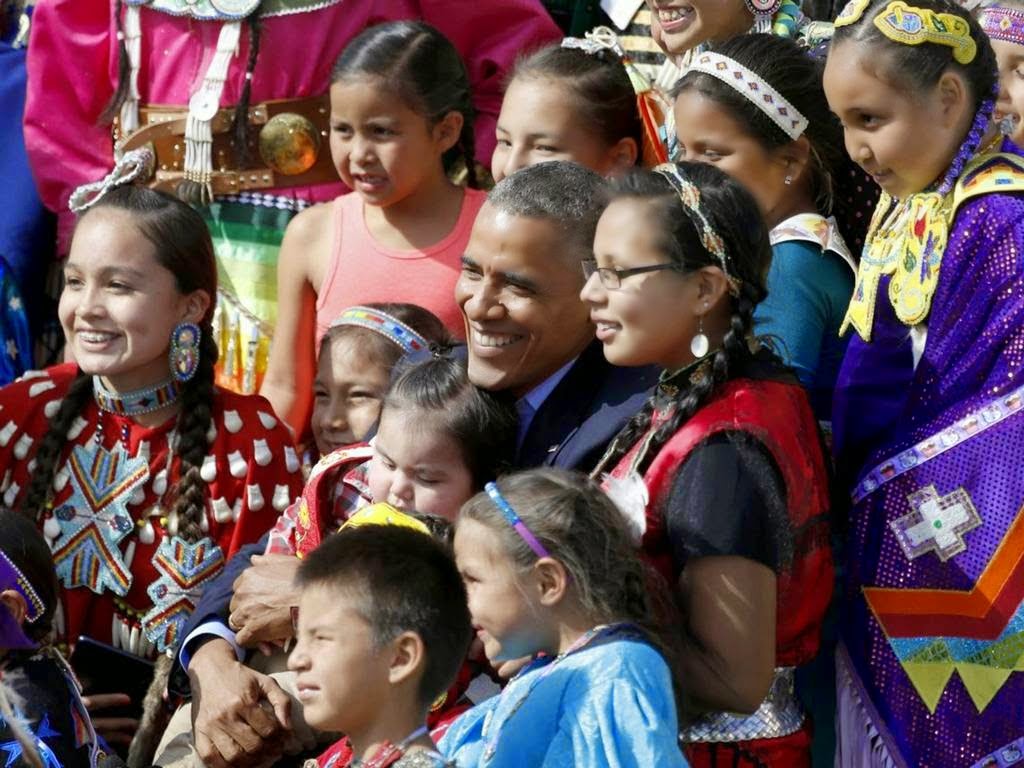
President Obama and First Lady Michelle Obama recently visited the Standing Bear Sioux Reservation of the Lakota and the Dakota. Here are some pictures: