Posts

Showing posts with the label Plaza de Espana

History of the Guam Museum Columns
Image
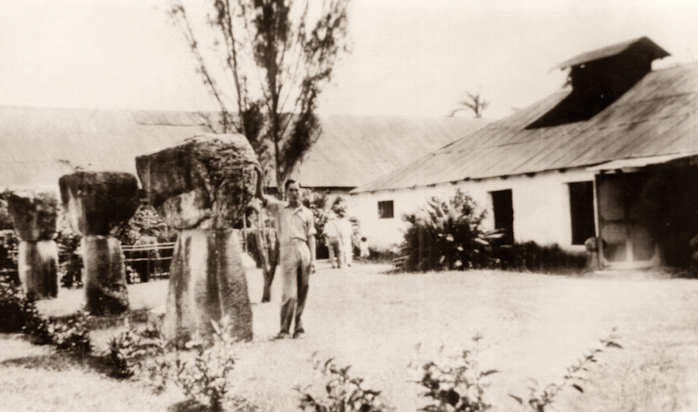
In 2022 while attending the first ever Native Hawaiian Pacific Islander Museum Institute (NHPIMI) in Hawai'i, I began to write a series of columns for the Pacific Daily News that covered some of the 90 year history of the Guam Museum.   In recent decades the Guam Museum has a fairly complicated history, where at times for years there was no actual museum, just a collection moving from storage space to storage space. Even at times when there has been a physical, dedicated facility for the museum, sometimes there has been insufficient staff or resources. Even legally where the museum falls within the Government of Guam as an agency has changed over the past forty years.  For these complicating factors, the columns focused on the museum's history from the 1930s to the 1970s.  ******************* “Can a Museum Being a Living Institution?” July 21, 2022   I am spending the month of July at the East-West Center as part of the historic first cohort for the Native...

Ten Weeks for the Tweed Protest

Image
  For the past 10 weeks, I've been writing columns for the Pacific Daily News providing historical context for the 1946 protest of US Navy Radioman George Tweed by more than a 100 Chamorus. Today marked my last column on the series. Although I did get a great deal more hate messages and a hateful comments during this series, I still greatly enjoyed writing these pieces. George Tweed was such an incredibly important symbol for Chamorus during the Japanese occupation. For me as a historian it is fascinating to think about how, just two years after the end of that occupation, more than a 100 Chamorus felt compelled to make signs and protest him when he returned to island. They didn't do this in the dead of night, but in the middle of the Plaza de España in front of the leadership of the US Navy on Guam. As I wrote in this last column, it was a multitude of things that compelled Chamorus to take this act, but many of them weren't about Tweed himself. Chamorus were frustrated th...

Nuebu na Cho'cho'

Image
Guahu i nuebu na curator para i Museon GuÃ¥han. Gof magof yu' na ma'apunta yu' gi este na ofisio. Hu ayuda fumÃ¥'tinas i petmanente na fina'nu'i para i museo "I Hinanao-ta." Kada sÃ¥kkan, hu konne' guatu noskuÃ¥ntos na gurupon taotao (sesso biaheru siha), ya hu esgaihon siha gi halom i fina'nu'i ya hu fa'nÃ¥'gue siha put i hestorian i Chamoru. Gi todu i bidadÃ¥-hu, ya-hu famanÃ¥'gue taotao, maseha guini giya GuÃ¥han,  pat ginen otro tÃ¥no' put i irensian yan hestorian i taotao-ta. Para Guahu, gof dÃ¥ngkolo' na onra este, para bai hu representa i taotao gi taiguini na ofisio.  ************************** The Guam Museum From Guampedia Named for the late Senator Tony M. Palomo The  Guam Museum , located at Skinner Plaza in the heart of HagÃ¥tña, Guam, is a government of Guam owned museum focused on the history of Guam. It’s official name is Senator  Antonio M. Palomo  Guam Museum and Educational Facility. The Guam Museum reflects the ...

Iya Hagåtña

Image
Infotmasion put i siudat (mismo songsong, lao i maga'songsong para i Islan GuÃ¥han) gi Fino' Chamoru. Hu tuge' este para un curriculum project dos años tÃ¥tte. Ya-hu bei na'huyong guini lokkue', sa' hu Tango' na guaha estudiante pat otro e'eyak ni' sesso manmambisisita guini gi este na blog, ya ma kekealigao este na klasen tiningo'. ********************** Put iya HagÃ¥tña GuÃ¥han i mÃ¥s dÃ¥ngkolo’ na isla gi islas Marianas. HagÃ¥tña i kapitÃ¥t na siudat. Gaige meggai na ofisinan gobietno giya HagÃ¥tña. Gaige lokkue’ i gima’ i Gobietno yan i Lihelaturan GuÃ¥han. I PlÃ¥sa de España mahÃ¥tsa desdi i tiempon Españot; manggaige guihi i kosas yan estorian i manmasusedi gi duranten i tiempon Españot. Gaige i PlÃ¥sa gi fi ʹ on i gima ʹ yu ʹ os Dulce de Maria Cathedral-Basilica.  DÃ¥ngkolo’ este na guma ʹ yu ʹ os ya ma silelebra i gipot Santa Marian Kamalen gi diha ocho gi Disembre guini. DÃ¥ngkolo’ este na silebrasion giya Guahan. I hinenggen Katoliko gi...

Everyday

Image
When I was in graduate school I spent years collecting Guam mentions. I would hunt for them everywhere. In every database I could find. In every archive. In every index for every book. I would search through websites, through blogs, on Youtube videos. As I was writing my dissertation these Guam mentions represented a significant part of my "data." These were the things I wanted to analyze. These were the things I wanted to find some underlying structure for. It was difficult not in terms of articulating my thoughts, but articulating them in such a way that other people might care. When you are writing about "small" cultures or "small" islands, there is always the burden that your smallness puts on you. There is always a need to force you next to something larger so you can feel more relevant or more familiar. There is a need to put Chamorros next to another group, Native Hawaiians, Puerto Ricans, Filipinos, Okinawans, any other group that might be more...

Chamorro Studies

Image
Kao malago’ hao tumungo’ mas put este na islÃ¥-ta? Do you want to know more about this island of ours? Kao malago’ hao tumungo’ mas put i kutturan Chamoru? Do you want to know more about Chamorro culture? Kao malago’ hao tumungo’ taimanu fumino’ Chamoru? Do you want to know how to speak Chamorro? Kao malago’ hao tumungo’ taimanu mÃ¥nnge’ gi fino’ Chamoru? Do you want to know how to write in Chamorro? Chamorro Studies is a new major at UOG that can help you with all these things. Chamorro Studies is an interdisciplinary program, where students can choose from a diverse range of electives including Biology, Literature, History, Anthropology and Psychology and can choose what sort of emphasis they want to take in terms of studying Chamorros, their history, language and culture. Email me at mlbasquiat@hotmail.com if you would like to know more about Chamorro Studies at UOG.

Understanding Guam's Colonial Past/Present

Image
History has a way of reminding you that what you take for granted today did not exist in the past, and worse yet, there may have been a point in the past when what you take for granted today was unimaginable. There is one quote from Robert Underwood that sums of this strange way that history can haunt people and deprive them of a feeling of essentialness with the present. It comes from his essay "Teaching Guam History in Guam High Schools" and it talks about the position of Chamorros from 1898-1941 in relation to the United States. The Chamorro people were not Americans, did not see themselves as Americans-in-waiting, and probably did not care much about being Americans. The US relationship during that period was unapologetically colonial. The US didn't have a colonial office as other countries did, but instead just colonized Guam through the US Navy and racist and paternalistic rhetoric/policies. The US Navy preached the glories of its nation in Guam, but Chamor...

A Proud Member of the Amnesia Industry

Image
A few weeks ago I was taking one of my English classes on a short tour around the historic central area of Hagatna. We walked from Angel Santos Memorial Latte Stone Park, through the Plaza de Espana and finally to Skinner Plaza. The point was for students to see the ways in which history is layered upon itself. You can see this in the way the Spanish part of Hagatna is also filled with American history in the way the American came to occupy the same colonial place, even to the point of remaking the primary buildings, such as the palace, in small ways to make it fit their tastes or their mission in Guam. But beneath all of that there is also the history prior to colonialism. It still emerges in so many ways, most of which swing between being overly visible to barely perceptible. Angel Santos Memorial Latte Stone Park is one such place. As both the Plaza de Espana and Skinner's Plaza seem to exist to glorify the colonizers of Guam, the Park seems to attempt to signify something els...